Special Report: The Autumn Budget 2025: What Does it Mean for Individuals and Businesses?
The UK government just published the Autumn Budget, with significant tax reform. Chancellor Rachel Reeves announced her aim as “a Budget for fair taxes, strong public services, and a stable economy” [1].
This article outlines the main changes introduced by the budget and assesses the impact on both businesses and individuals, in addition to providing a brief overview of legal implications. Understanding a significant policy change such as the budget is an important exercise not only for future lawyers, but for every individual to understand how policy changes affect you and those around you.
Policy Changes: Key Highlights
Law firms
Law firms welcomed news that limited liability partnerships will not face new taxes, a relief as this was predicted to impact “firms’ ability to invest, hire and contribute to growth, which could prove damaging to the wider economy” per Law Society President Mark Evans [2]. Additionally, tax advisers will not be regulated [3]. On the flip side, some law firms are dissatisfied with the Economic Crime (Anti-Money Laundering) Levy facing an approximate 1400% rise for larger entities. This tax is imposed on businesses under a duty to prevent such activities, including relevant law firms. For instance, in handling large transfers of money for an M&A deal. This may prove challenging for firms to prepare for, with the levy promptly taking effect in April next year. This policy change could impact other relevant businesses, such as financial institutions with a duty to prevent money laundering [3].
Other businesses
The Budget introduced a 40% first-year allowance for qualifying capital assets, for businesses to claim relief in the year they purchase them, alongside decreased business rates* for retail, leisure and hospitality sectors [4] [5]. General business rates will increase in alignment with property prices, but
£4.3bn is allocated to support this transition [5]. Other highlights include increased investment under Venture Capital Trusts (VCT) and Enterprise Investment Scheme (EIS), with the amount companies may receive seeing a 50% increase to £10mn and £20mn for knowledge-intensive companies [5]. These funds support early-stage companies and more that are seeking to grow [6].
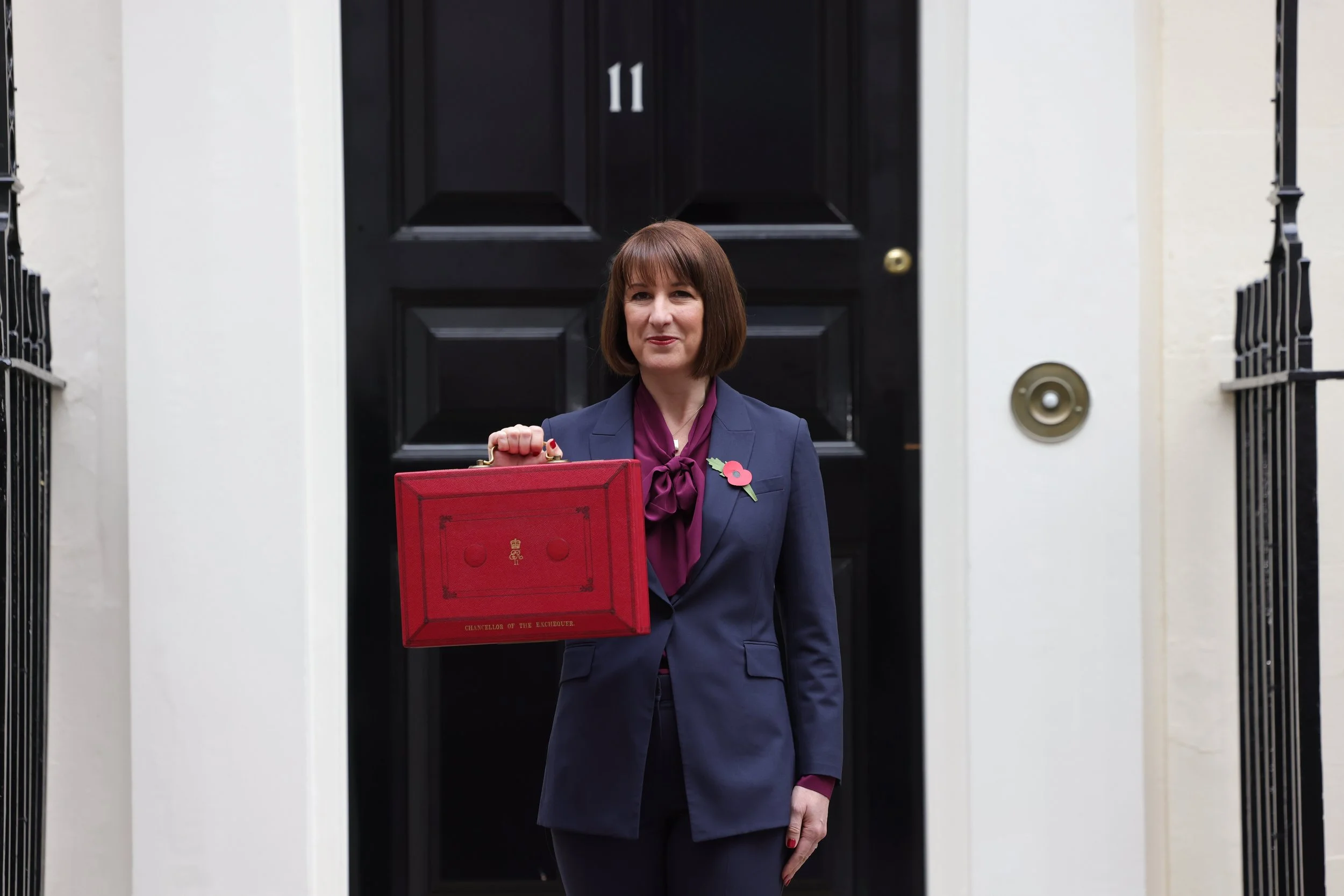
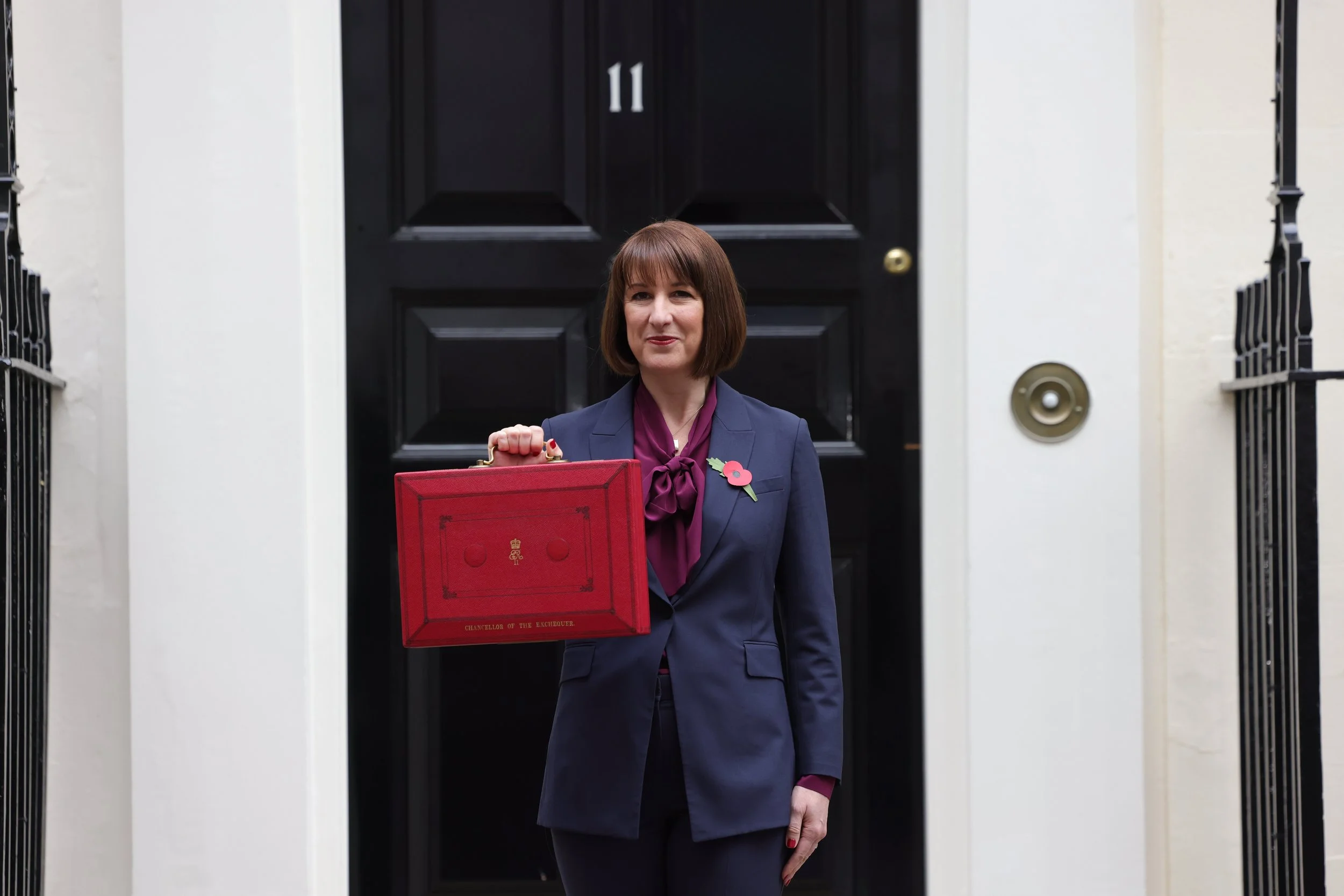
Chancellor Rachel Reeves delivers the Autumn Budget 2024. Kirsty O'Connor / Treasury - HM Treasury, OGL 3, https://commons.wikimedia.org/w/index.php?curid=154638953 Contains public sector information licensed under the Open Government Licence v3.0.
Individuals
Individuals face various tax rises on dividends (effective April 2026), electric vehicles being subjected to a per-mile charge (effective April 2028), a property tax increase of 2% (effective April 2027) and a “High Value Council Tax Surcharge” on homes valued over £2 million (effective April 2028) [5].
Moreover, salary sacrifice contributions to pensions from employees and employers will have a cap on tax-free allowance, invoking national insurance contributions beyond that [5]. Also, the income-tax thresholds will remain frozen until 2030 despite inflation, which the government typically increases thresholds in alignment with [7]. For under 65s, the cash allowance for ISAs (which are tax-free savings accounts) will be reduced to £12,000 from £20,000 as of April 2028 [5].
A more positive change includes national minimum wage and national living wage being set to increase, with the greatest pay raise for 18–20-year-olds at 8.5% or £10.85 per hour. Additionally, lower-income households will no longer be restricted to claiming benefits for two children [5]. See further information at Budget 2025 (HTML) per Gov.Uk.
Businesses
Despite Chancellor Rachel Reeves purportedly aiming to support businesses and stimulate the British economy [5], the Autumn Budget could have the opposite effect according to FT writer Valentina Romei [8]. Contrary to JP Morgan Chief Jamie Dimon who announced a 3mn square foot tower [9], most UK businesses may not share the same sentiment of confidence [8]. Business investment is predicted to fall by 0.4 percent within the next year according to the Office for Budget Responsibility, dropping for the first time in six years [8]. This could be linked to higher taxes lowering disposable income, which may contract consumer spending.
The Budget is predicted to increase taxes by £26bn, with the tax burden predicted to reach ~36% of Britain’s predicted GDP in 2030 [8]. On top of this, per the head of the Recruitment & Employment Confederation Neil Carberry it is argued that the Budget did not make sufficient incentives for businesses to invest amongst “rising business costs” [8]. These include higher minimum wage, and last April’s elevated employer NI contributions [10]. Further aggravating this is the unstable political and economic environment [8]. Low business investment may exacerbate this as it is responsible for stimulating the economy and is vital in improving living standards [8].
Individuals
Increased taxes could raise costs for nationals, with a cap on salary sacrifice contributions further discouraging pension savings and threatening individual’s future financial security [3]. The frozen income tax thresholds may also lead to “fiscal drag” [7]. This is where wages increase (oftentimes with inflation), dragging individuals into higher income brackets with higher tax. This could leave them with a similar nominal income, but higher taxation [7]. Although, the Autumn Budget has introduced benefits such as higher minimum wage [5].
Government
Using taxes raised by the Autumn Budget, the government plans on investing £120 billion in the NHS and public services, investing £900 million in infrastructure such as publicly funded works for the Lower Thames Crossing and increasing funding for the justice system to £13.2 billion by 2028–29, amongst others [5].
Legal Implications
Most political or economic fluctuations will give rise to work for law firms. Changes in property, tax and investment policy can shape the nature of work for both private-client and commercial practitioners. Companies could seek advice from employment lawyers on amending contracts in alignment with revised minimum wage prices, and the newly introduced tax-free allowance cap on salary sacrifices contributions.
Regarding the latter, employers may seek legal expertise on how to restructure pensions arrangements to absorb the impact of higher NI tax incurred. Moreover, with lowered business confidence in the near future, corporate lawyers may have to take a more risk-averse approach to avoid litigation and minimise costs. These are just a few examples of many.
Conclusion
To conclude, the Autumn Budget has introduced several changes that will impact both individuals and businesses (including law firms). The Budget has widespread implications that can be understood considering the current economic uncertainty that Britain is facing, which could result in a business investment decline. Most notable for individuals is the significant rise in taxes, which could aggravate the cost-of-living crisis. Such changes give rise to ample work for law firms.
*Business rates = tax on property used non-domestically, usually for business purposes [11]
References
[1] HM Treasury and MP Reeves R, ‘Budget 2025 Speech’ (GOV.UK, 26 November 2025)
<https://www.gov.uk/government/speeches/Budget-2025-speech#:~:text=My%20choice%20is%20a% 20Budget%20for%20fair%20taxes%2C%20strong%20public%20services%2C%20and%20a%20stabl e%20economy.%C2%A0%C2%A0%C2%A0> accessed 1 December 2025
[2] The Law Society, ‘Autumn Budget 2025 – Five Key Announcements for Solicitors and Firms’
<https://www.lawsociety.org.uk/topics/business-management/autumn-Budget-2025-solicitors-firms> accessed 1 December 2025
[3] Cross M ‘In depth: Budget 2025 - what it means for solicitors’ (Law Society Gazette, 28 November 2025)
<https://www.lawgazette.co.uk/news-focus/in-depth-Budget-2025-what-it-means-for-solicitors/51252 72.article#:~:text=In%20an%20unashamedly%20tax%2Draising,mandatory%20regulation%20of%20 tax%20advisers> accessed 1 December 2025
[4] Knowles A, ‘Autumn Budget 2025: What It Means for Businesses and Individuals’ (Moore UK, 26 November 2025)
<https://www.moore.co.uk/insights/autumn-Budget-2025-what-it-means-for-businesses-and-individua ls/#:~:text=Business%20rates%20relief,relief%2C%20supporting%20the%20creative%20industry> accessed 1 December 2025
[5] HM Treasury, ‘Budget 2025 (HTML)’ (26 November 2025).
<https://www.gov.uk/government/publications/Budget-2025-document/Budget-2025-html> accessed 1 December 2025
[6] HM Revenue and Customs, ‘Venture Capital Trusts, Enterprise Investment Scheme investment limit increase and restructure’ (26 November 2025).
<https://www.gov.uk/government/publications/enterprise-investment-scheme-eis-and-venture-capital-t rusts-vct-changes/venture-capital-trusts-enterprise-investment-scheme-investment-limit-increase-and-restructure> accessed 1 December 2025
[7] Clarke S and Osborne H, ‘How Does Freezing Income Tax Thresholds Affect Your Own Tax Bill?’ (The Guardian, 26 November 2025)
<https://www.theguardian.com/uk-news/ng-interactive/2025/nov/26/how-does-freezing-tax-thresholds
-affect-your-own-tax-bill#:~:text=Freezing%20tax%20thresholds%20results%20in,year%20in%20lin e%20with%20inflation> accessed 1 December 2025
[8] Romei V, ‘Business Investment to Fall for First Time since Covid, UK Fiscal Watchdog Says’
<https://www.ft.com/content/ded052f5-fad3-4fac-8999-65af3ed62d5b> accessed 3 December 2025
[9] Steinberg J and Aliaj O ‘JPMorgan to build New Canary Wharf Office Tower’ ( 27 November 2025) <https://www.ft.com/content/11358be2-1fd7-4cbc-a584-948c79576b02> accessed 1 December
2025
[10] Armstrong A, Pickard J and Fleming S (Business chides Reeves for not kick-starting growth in Budget, 27 November 2025) <https://www.ft.com/content/887dc5af-cc19-4478-90ab-6c7bf5fc5d4c>
accessed 1 December 2025
[11] Gov.UK, ‘Business Rates’ . <https://www.gov.uk/introduction-to-business-rates> accessed 1 December 2025