The Fight Against Weight Loss Jabs: Trading in the Dark, the Market Good and the Ugly
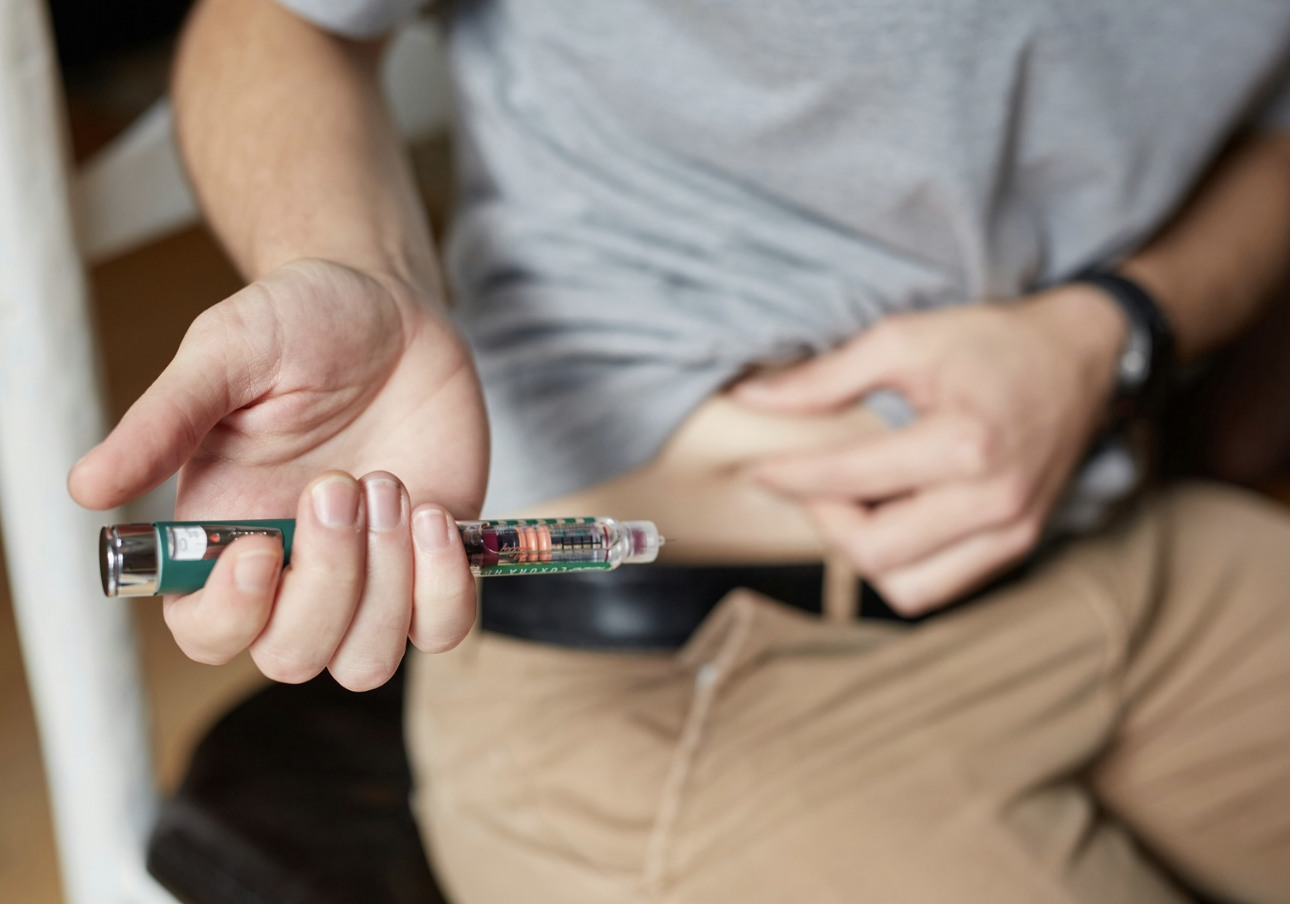
Weight Loss Jabs have been on the forefront of the media and of intense debate in the UK, with intense discussions surrounding the harms of weight loss jabs on our bodies and the shift in the fast food market, this article aims to focus on the commercial harms (and a few benefits) of market loss in the UK, such as regulations fighting to combat the harmful lies from weight loss jabs advertisers and black markets that sell illicit weight loss jabs. This article will also explore other market implications: the fast-food businesses’ shift to healthy foods and the shift in consumers’ eating habits.
Commercial Advertising Market
Advertisers do not adhere to the advertising regulations and promote weight loss jabs in a targeted way towards consumers.
In the United Kingdom, Prescription Only Medication (or POMs) cannot be advertised, and claims made in advertisements for POMs must be authorised by government bodies [1]. Additionally, claims surrounding weight loss must be registered on the Great Britain Nutrition and Health Claims Register [1].
However, government bodies such as the Medicines and Healthcare products Regulatory Authority have cracked down on many cases of companies advertising weight loss drugs, attempting to deceive customers and capitalising on their insecurities. For example, in December 2025, the Medicines and Healthcare products Regulatory Authority caught Menwell Ltd in December 2025 for improperly advertising a weight loss drug [2]. According to the official government report by the authority, they reported that “The advertisement included statements such as: 'They raised prices unexpectedly — we lowered ours on purpose' and 'Start from £94 a month for the same medication'” [2]. The advertisement contained POMs for adults: regulations prohibit this because POMs should not be considered over-the-counter medications [3]. In another case, the Advertising Standards Authority has banned ads that promote weight loss jabs that target body insecurities. The adverts were from companies such as Chequp Health Ltd [4]. According to the ASA, the ad included “an image of a woman looking at herself in a mirror with text stating ‘I don’t want to be skinny. I just don’t want to be the biggest person in the room” [4]. ASA also stated that the Facebook link under the advertisement linked to an advertisement for POMs [4]. From the crackdown, the Government is firm on the stance that these ads exploit body insecurities and create false claims about POMs being used in one’s own discretion without medical attention, when in reality, they should be supervised by medical professionals and advertisers [5]. According to the Digital Markets, Competition and Consumers Act 2024 s94, it is prohibited to “falsify information and the person commits an offence if they know that it is false (…)” [6]. Under page 54 of the Unfair Commercial Regulations, businesses and sellers should not “coerce (i.e., exploit their position of power) to disrupt customers’ capacity for decision-making" [7]. From the above, advertisers are coercing consumers by weaponizing their insecurities to urge them to buy these drugs, while romanticising these drugs and claiming they can help consumers lose a large amount of weight in a short amount of time, despite Commercial regulations and Laws prohibit these false advertisements for POMs to falsely mislead young people to lose weight to promote a healthy advertising market. This begs the question of whether weight loss jabs advertisers can continue to evade commercial regulations and Laws to use lies and deceit attract vulnerable women, teenagers, etc to inject weight loss jabs. This is not fair for advertisers who adhere to the rules and Laws accordingly, nor is it fair for the vulnerable consumers who are being lied to while seeing advertisements like the ones made by Chequp Health Ltd.
The Underground Market
Unfortunately, the crackdown by authorities has not stopped the never-ending black market from forming. There has been a growing and never-ending black market for unlicensed weight loss drugs on social media platforms such as TikTok [8]. The process of it is as follows, using a drug called Retatrutide as an example: Illegal medication (Retatrutide) will be advertised on social media platforms (i.e., TikTok) as a drug that helps people lose “up to a quarter of their body weight within a very short time” [8]. They can be purchased on platforms such as WhatsApp and Telegram [8], which can be difficult to regulate due to their secretive texting nature. Influencers may try to evade it by saying it is not for human consumption; however, this drug is unlicensed and cannot be supplied for consumer use under the Human Medicines Regulations 2012 [8].
Authorities have cracked down on factories that produce these illegal drugs to try to stop this never-ending black market from forming online and offline. For example, the MHRA has taken down a factory in Northampton that trafficked weight loss drugs with an estimated “more than 250,000 pounds” worth of medications, along with around “20,000 pounds in cash” [9]. Although raids can help take down some of the organised crime network down and protect public health [9], unfortunately, this does not tackle the entirety of the black-market problem, and the MHRA has advised consumers that there are ways to look out while strolling through advertisements online. For example, they note that the best way to look for red flags in advertisements is phrases such as “quick fixes” and “miracle results” [10].
The Shift in Food Business and Deterioration of Market Integrity
Weight loss jabs impact the market in many forms, such as motivating food businesses to shift their target market and changing consumer habits. In terms of consumer habits, there is a trend of staying sober and staying off alcohol and seeking protein-rich products due to weight loss jabs [11]. For food industries, Greggs’ CEO has commented recently in January 2026 that Greggs has seen an immense loss in sales [12]. Thus, the company has considered marketing healthy food to cater to the health-conscious market and people who are using weight loss jabs and aiming to maintain their weight post weight loss [12]. Leon CEO has said their businesses will see a big rise due to their food catering to people on weight loss drugs [13]. From the above, these can be seen as a positive indicator for the rise of weight loss jabs because consumers now seek healthy food, overall promoting public health through encouraging healthy eating in the consumption market. However, this can be contentious as the harms of weight loss jabs mentioned above greatly outweigh the benefits.
However, weight loss jabs harm the market immensely through promoting scams. Due to scams, consumers will start to question the pricing, the sellers and the market itself. Additionally, honest consumers who do purchase in good faith end up being harmed by scammers, discouraging consumers to purchase, which slows down the commercial market due to the lack of participation. This creates a deathly cycle of commercial market deterioration. According to reports, in weight less jab scam operations, scammers take advantage of people’s helplessness in accessing prescribed medications for weight loss and send messages advertising cheaper medication without ‘going through the official channels’ [14]. People will end up either losing money or receiving a fake version with ‘unknown ingredients’ and a recipe for disaster [14]. Shockingly, the average victim loses around 120 pounds in money [14]. Deceit, lies, and fake advertising create a chain of events that, overall, rapidly deteriorate market integrity. Consumers can no longer seek prescribed medicine in good faith; instead, they must consistently be cautious about the minuscule details in advertisements. This does not create a healthy consumer market; it is a vulnerable market that can crumble quickly because it is built on deception and misinformation.
Conclusion
With the continuous rise of weight loss jabs, this has caused irreparable harm to the market, such as the rise of advertisements that capitalise on insecurities and deceit, harming market integrity, as well as furthering the black market for illicit drugs, ultimately leading to scams and lowering market integrity. Even if the Government did crack down on these weight loss jabs, it is unlikely that it will stop. In a world that promotes photoshopping, plastic surgery and a world that encourages scams and deceit through a lack of action by official government bodies, it is very likely that consumers will still purchase weight loss jabs for the gratification of losing weight and scammers will continue to fulfil those demands of achieving a certain beauty standard due to the shortcomings of the UK’s medical system.
References
[1] Katherine Mason, ‘Weight loss injections: Key lessons for food advertisers’ (Browne Jacobson, 6 January 2026) < https://www.brownejacobson.com/insights/new-year-new-me-food-and-drink-insights-2026/weight-loss-injection-ads> accessed 16 January 2026
[2] Medicines & Healthcare products Regulatory Agency, ‘Promotion of service and medicinal products for weight loss by Menwell Ltd trading as Voy – December 2025’ (Gov.uk, 9 January 2026) < https://www.gov.uk/government/publications/advertising-investigations-december-2025/promotion-of-service-and-medicinal-products-for-weight-loss-by-menwell-ltd-trading-as-voy-december-2025> accessed 16 January 2026
[3] Faarea Masud, ‘Weight-loss jab ads banned for exploiting body insecurities’ (BBC, 17 December 2025) < https://www.bbc.co.uk/news/articles/cly5v89xny3o> accessed 23 January 2026
[4] Molly Bowcott, ‘ASA weight loss jab ad triple ban for ‘targeting body insecurities’ (C+D, 17 December 2025) < https://www.chemistanddruggist.co.uk/news/regulation/asa-weight-loss-jab-ad-triple-ban-for-targeting-body-insecurities-ZV5O6KJ3BJDP5CDSPURONDIP7U/> accessed 16 January 2026
[5] Advertising Standards Authority, ‘ASA issues warning to weight-loss drug advertisers’ (5 December 2024) < https://www.asa.org.uk/news/asa-issues-warning-to-weight-loss-drug-advertisers.html> accessed 21 January 2026
[6] Digital Markets, Competition and Consumers Act 2024
[7] Competition & Markets Authority, ‘Unfair Commercial Practices: Guidance on the Protection from unfair trading provisions in the Digital Markets, Competition and Consumers Act 2024’ (November 2025) < https://assets.publishing.service.gov.uk/media/691b9bd821ef5aaa6543ee6f/Unfair_commercial_practices_CMA207_18_Nov_2025__2_.pdf> accessed 16 January 2026
[8] Sarah Marsh, ‘TikTok influencers fuelling parallel market for unlicensed weight-loss drug’ (The Guardian, 11 October 2025) < https://www.theguardian.com/money/2025/oct/11/tiktok-influencers-telegram-whatsapp-parallel-market-unlicensed-weight-loss-drug-retatrutide-uk> accessed 16 January 2026
[9] Alex Pope, ‘First raid on UK illegal weight loss drug factory’ (BBC, 25 October 2025) < https://www.bbc.co.uk/news/articles/czdr3zl98e4o> accessed 27 January 2026
[10] Nicola Davis, ‘UK medical regulator warns against buying weight-loss jabs from social media channels’ (The Guardian, 29 December 2025) < https://www.theguardian.com/society/2025/dec/29/uk-medical-regulator-warns-against-buying-weight-loss-jabs-from-social-media-channels> accessed 16 January 2026
[11] Esyllt Carr, ‘Five ways weight-loss jabs are changing spending habits’ (BBC, 25 January 2026) < https://www.bbc.co.uk/news/articles/cj6wy85l3x5o> accessed 26 January 2026
[12] Faarea Masud, ‘Weight loss jabs affecting Greggs, boss says’ (BBC, 8 January 2026) < https://www.bbc.co.uk/news/articles/c20g11y4dywo> accessed 16 January 2026
[13] Emer Moreau and Jemma Crew, ‘Weight loss jabs are 'opportunity' for Leon, boss says’ (BBC, 16 January 2026) < https://www.bbc.co.uk/news/articles/cd7z8j9j3ypo> accessed 16 January 2026
[14] Shane Hickey, ‘Weight loss jab warning: fraudsters’ fake products ‘could cause real harm’ (The Guardian, 2 November 2025) < https://www.theguardian.com/money/2025/nov/02/weight-loss-jabs-scam-ads-fake-products-fraud> accessed 23 January 2026
Image Credits
Sweet Life on Unsplash <https://unsplash.com/photos/a-person-holding-an-insulin-injection-0rXHOonM9Ug>