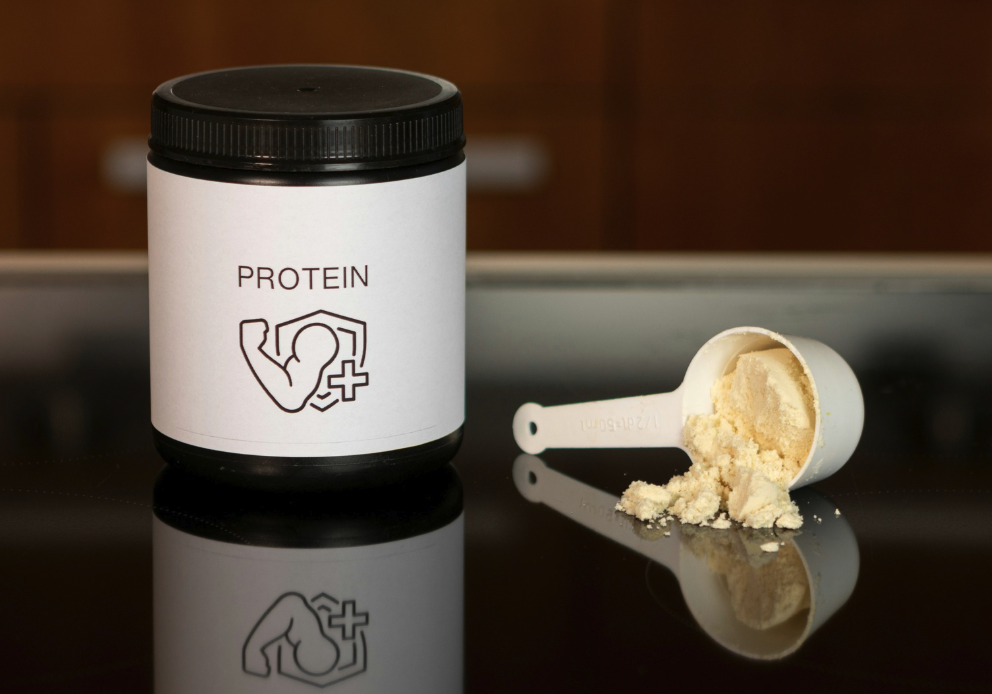
How Protein Became the Food Industry’s Easiest Sell
Introduction
The current surge of products labelled as high-protein alternatives is hard to ignore. From yoghurt to Snickers bars, food companies are taking familiar everyday products and marketing them as high-protein options [1]. Emerging from gym culture and a broader drive towards healthier lifestyle, protein – and specifically processed protein, has rapidly become a mainstream product of supermarket shelves.
Reflecting a market shaped by simplified consumer decision-making, rising prices, and increasing health-consciousness trends, food companies have leaned into these shifts. Processed protein is profitable and relatively easy to market. Analysts now predict protein will be the biggest food trend of 2026 [2], not because consumers face a widespread deficiency, but because it sells.
The Commercial Rise of Protein
Analysts have identified protein as the ‘dominant macronutrient trend across global food categories’ [3], a position reached largely through commercial momentum. As consumers increasingly priorities health and wellbeing [4], food companies have responded by foregrounding protein as a clear and recognisable marker of healthier eating.
This emphasis is reflected not only on supermarket shelves but in lifestyle media. Headlines such as ‘10 High-Protein Breakfasts to Power Your Morning – and Keep You Going Until Lunch’ [5], have become commonplace. From switching out a muffin for Greek yoghurt [6], framing protein as a solution to everyday concerns such as energy and weight control helps embed it into routine consumption, therefore increasing commercial demand. Several broader forces support this shift. Of course, gym culture plays a significant role, with social media accelerating the spread of protein-focused messaging. However, the short, simplified format of online nutrition content, particularly fitness influencer-led videos on platforms such as TikTok and Instagram, further reduces complex dietary advice into easily digestible claims, with protein emerging as the most visible and easily marketable marker of health.
What began as a discussion around for alternative protein due to population growth, as reported by the Financial Times in 2019 [7], has since developed into a major industry. In 2024 alone, the alternative protein industry raised $1.1 billion in investments [8], bringing total funding since 2016 to over $19 billion. The scale of capital suggests that investors see alternative protein not as fringe products, but as important, long-term market players. This is reflected in the protein sources most visible on supermarket shelves. Established ingredients such as whey protein, derived from milk, and soy protein act as commercial “bridges”. Already embedded in products such as yoghurts and protein shakes, they allow manufacturers to increase protein content without requiring consumers to change their shopping behaviour.
Protein and Pricing Strategy
Contrary to common assumptions, protein-labelled products are not always priced at a premium. A comparison between two similar yoghurts, both Waitrose own brands illustrate this. The Waitrose Protein Vanilla Yoghurt is priced at £5.20 per kilogram [9], while the Waitrose Madagascan Vanilla Yoghurt costs £6.67 per kilogram [10]. From a consumer perspective, the protein yoghurt is at face-value, far more attractive. Offering a higher protein content at a lower price, it is understandable why these options are becoming so popular. From a commercial perspective, this highlights the strategic value of protein as a pricing tool: as a simple and easily measurable health claim that can be added to existing products at relatively low cost, protein allows companies to differentiate their offerings while maintaining competitive pricing and commercial viability.
Why Protein Works for the Food Industry
Beyond individual products or pricing strategies, protein’s dominance reflects how closely it aligns with the structural needs of the modern food industry. As consumers demand for higher protein intake has intensified, manufacturers have prioritised products that deliver protein efficiently, often whilst offering low calorie or cost options [11]. This has encouraged that growth of highly formulated protein products, including shakes and powders that are classified as ultra-processed foods (UPFs) [12]. From a commercial perspective, these products offer clear advantages: long shelf lives and easy integration into existing distribution systems. BBC News has highlighted how food companies are rapidly being forced to adapt existing product ranges to meet rising protein demand across multiple categories [13].
For food companies, this dynamic is commercially valuable. Process products are scalable and profitable, whilst following the trend of “clean eating”. In this sense, protein’s success is less about redefining nutrition and more about how effectively it fits the economic demands of the modern food market. Recent Financial Times analysis of the food industry further illustrates protein’s commercial reach, suggesting that global protein demand could rise by 37 per cent over the next five years [14]. Food companies are now fortifying an increasingly broad array of mainstreams products [15], with coffee shops like Starbucks offering protein-based drinks. This widespread adoption and investments into high-protein products across food categories is unlikely to slow in the coming years. Instead, the trend is not a niche or fitness focused one, but a large-scale reformulation of the food industry.
Conclusion
In this context, proteins success offers food companies a way to differentiate products and respond to consumer demand using ingredients and processes that are already scalable and familiar. Rather than signalling a fundamental shift in nutrition, protein reflects how health is currently communicated and monetised within food markets, and a catalyst of social media trends. If health continues to be communicated and understood through simple answers, protein is likely to remain one of the industry’s most effective commercial tools.
References
[1] How protein rose to the top of the food chain, (Financial Times, 1 February 2026)
https://www.ft.com/content/e853f675-2f3d-4876-953a-4c87f51100ef accessed 1 February 2026
[2] Good Food Institute, Investing in Alternative Proteins (Good Food Institute)
https://gfi.org/investment/ accessed 1 February 2026
[3] Innova Market Insights, Protein Market Trends: Growth and Global Shifts (, 21 July 2025)
https://www.innovamarketinsights.com/trends/protein-market-trends/ accessed 1 February 2026
[4] Investors’ growing appetite for alternative proteins, FT Channels (Innova Market Insights, 28 November 2019)
https://channels.ft.com/en/rethink/growing-appetite-alternative-proteins/ accessed 1 February 2026
[5] Gordon M, ‘10 High-Protein Breakfasts to Power Your Morning – and Keep You Going Until Lunch’ (Real Simple, 4 August 2024)
https://www.realsimple.com/high-protein-breakfasts-11896317 accessed 1 February 2026
[6] Ro C, ‘Food firms scramble to meet the high-protein craze’ (BBC News, 7 October 2025)
https://www.bbc.co.uk/news/articles/c20zk35ypxno accessed 2 February 2026.
[7] Southey F, ‘The single biggest food trend for 2026 revealed’ (FoodNavigator.com, 11 December 2025)
https://www.foodnavigator.com/Article/2025/12/11/biggest-food-trend-for-2026-revealed/ accessed 1 February 2026
[8] Waitrose, Waitrose Madagascan Vanilla Yogurt Single (Waitrose & Partners)
https://www.waitrose.com/ecom/products/waitrose-madagascan-vanilla-yogurt-single/836985-291550-291551accessed 2 February 2026
[9] Waitrose, Waitrose Protein Vanilla Yogurt (Waitrose & Partners)
https://www.waitrose.com/ecom/products/waitrose-protein-vanilla-yogurt/562279-822495-822496 accessed 2 February 2026
[10] Yu C, ‘I Tried Eating Greek Yogurt for Breakfast Every Day for a Week—Here’s What Happened’ (Women’s Health, 20 July 2017)
https://www.womenshealthmag.com/food/a19904677/greek-yogurt-for-breakfast/ accessed 1 February 2026
Image Credits
Aleksander Saks on Unsplash <https://unsplash.com/photos/a-container-of-protein-powder-next-to-a-spoon-4CzpHxVzTFA>