A “War” on Drugs: Examining the Jus ad Bellum and Jus in Bello Justifications for US Strikes on Drug Boats in the Caribbean and Pacific
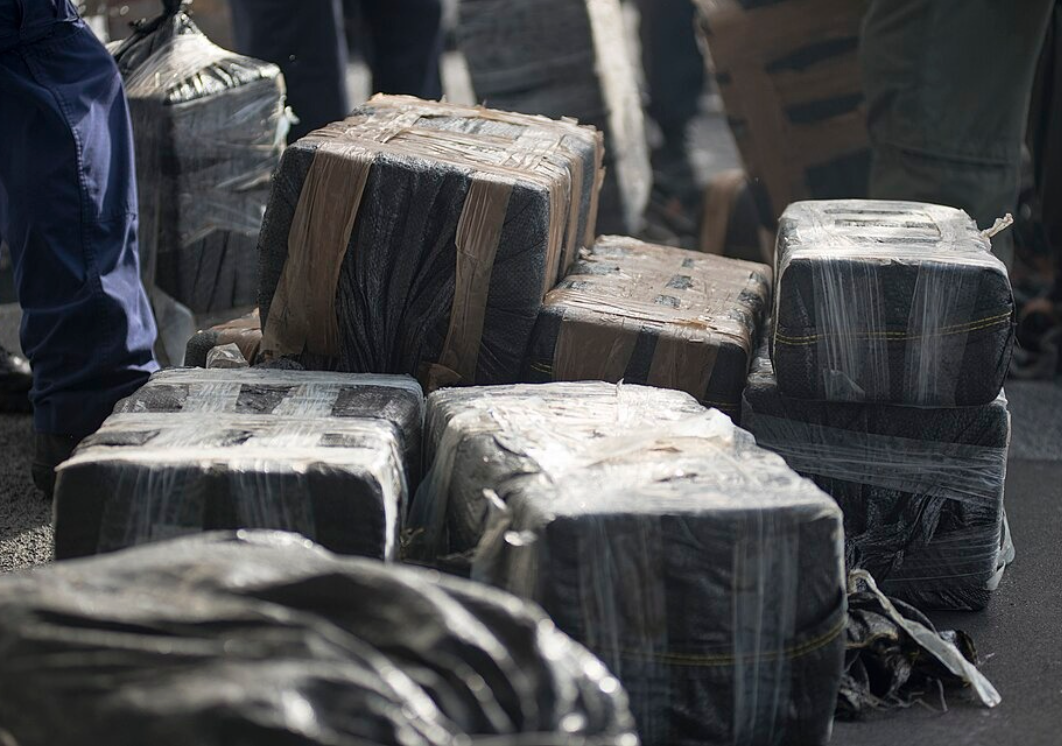
On the 17th of February 2026, the US military conducted a series of strikes on alleged drug boats in the Caribbean and Eastern Pacific, sinking 3 ships and killing 11 people.1 This comes as a part of a series of US strikes on drug boats and alleged “narco-terrorists”, which have, as of the 20th of February 2026, killed at least 145 people.2 This article aims to assess the legality of the strikes and the legal justifications that the Trump Administration has given. This article will consider two of these justifications: the right to self-defence under jus ad bellum and the classification of the conflict as a non-international armed conflict under jus in bello. This article will end by exploring the implications that so-called “wars on drugs” have on the development of international humanitarian law (IHL), calling for firm opposition to the erosion of IHL rules.
The Right to Self-Defence
Starting with the jus ad bellum justification, the Trump administration has invoked the assertion that the strikes were ‘taken in defense of vital U.S. national interests and in the collective self-defense of other nations [emphasis added]’.3 Prima facie, the use of force in international law is prohibited by art 2(4) of the UN Charter.4 However, art 51 gives an exception to this rule, stating that ‘the inherent right of individual or collective self-defence [will not be impaired] if an armed attack occurs’ against the state.
The first hurdle that the Trump Administration’s self-defence rationale fails to clear is the requirement, as per art 51 and confirmed in cases such as Nicaragua,5 that self-defence must be in response to an armed attack. The question to be asked is whether the smuggling of drugs into the US via boat constitutes an armed attack. Though the drug trade can bring illness and death, as Schmitt contends, ‘the causal chain between drug production/shipment/sale and those consequences is attenuated enough to preclude qualification of drug trafficking as a use of force’.6 In other words, the damage caused by drug trafficking is too remote to constitute an armed attack.
Even if the trafficking were a valid armed attack, the self-defence rationale would also fail because it requires for the action taken in response to be both necessary and proportionate.7 Though necessity can be argued, proportionality would likely be precluded as the US government had the completely viable and less harmful alternative of detaining and seizing the boats through the Coast Guard. Therefore, it is conclusive that the self-defence justification will not apply to the strikes.
The Classification of Armed Conflicts
Moving onto the jus in bello rationale, the Trump administration has stated that there is an ‘armed conflict’ between the US and the drug cartels.8 Through this classification, the Trump Administration aims to justify the strikes through treating the boats as combatants that can be validly targeted through rules of IHL. To do this, the “war on drugs” must be classified as either an international armed conflict (IAC) or a non-international armed conflict (NIAC).9 Should this fail, the much more restrictive peacetime rules apply, invoking international human rights law (IHRL) and the law of the sea (LotS).
International Armed Conflict?
First considering whether the “war on drugs” is an international armed conflict, it must be considered whether the actions of Tren de Aragua, the organisation that the Trump Administration claims is sending drug boats,10 are ‘attributable to the Venezuela under the law of State responsibility’.11 As of the date of writing, there had been no evidence that that Tren de Aragua is associated with the Venezuelan government. Therefore, there is likely no IAC here.
Non-International Armed Conflict?
In considering whether there is a NIAC, wherein a state is at war with a non-state actor, such as a crime organisation in the case of Tren de Aragua, there must be both sufficient organisation on the part of the non-state actor and the conflict must be sufficiently intense.12 The notion that the “war” between Tren de Aragua and the US is sufficiently intense to amount to a NIAC is questionable at best. Some examples of ‘indicators of intensity’ that the Red Cross provides are, inter alia, ‘the number, duration and intensity of individual confrontations between [the parties]’, ‘the number of persons and types of forces partaking in the fighting’, and ‘the extent of material destruction’.13 These indicators show that the threshold for intensity is high, with it being passed by, as Schmitt states, ‘violence that is akin to direct combat’.14 The supply of drugs, as harmful as it can be, simply does not pass this threshold. Therefore, NIAC will not apply and thus we must look to IHRL.
Another point to note is that, even if the “war on drugs” could plausibly be construed as a NIAC, the strikes would still have to comply with other jus in bello rules and principles, including proportionality. This becomes particularly relevant in relation to an attack conducted on September 2 2025, wherein a follow-up strike was conducted on an ‘alleged drug boat’.15 Though the Trump Administration denies that there were any survivors following the first strike, there were indeed 2 men who survived and were ‘clinging to the wreckage’.16 Targeted attacks against shipwrecked combatants is prohibited under art 12 of the first Geneva Convention17 (GCI) for IAC and under art 3 GCI for NIAC. Therefore, even if the conflict was a(n) IAC/NIAC the US government will still have committed a war crime.
The legality of the Strikes under IHRL and LotS
As it has been identified that IHRL and LotS are the appropriate regimes that apply to the strikes, it is through these lens that the legality of the strikes must be discussed. Under the ICCPR,18 which the US has ratified, art 6 protects the ‘right to life’. As Kachatryan has stated, the application of art 6 means that ‘outside armed conflict, the default objective is restraint and capture, not destruction’.19 This is echoed in the UN Basic Principles on the Use of Force and Firearms,20 which states that law enforcement must ‘as far as possible, apply non-violent means before resorting to the use of force and firearms’.21 If force is used, it must also be proportionate.22 LotS also offers protection in the form of SOLAS, wherein masters of ships must ‘proceed with all speed to the assistance of the persons in distress’.23 These principles show, in essence, that striking down ships and killing drug traders who are not in armed conflict are violations of both IHRL and LotS, especially when the less harmful alternative of detainment is available.
Implications and the Potential Erosion of IHL Principles
Moving onto the potential implications that the US strikes have, the first is a contribution towards the deligitimisation of IHL rules. This is even more pronounced considering the relatively resolute opinion of legal scholars that the attacks are illegal under international law. That a state is able to rely on and abuse rules of IHL to justify these illegal attacks does not bode well for IHL’s continued relevance as an effective way to regulate hostilities.
Another problem that the strikes may cause is that, if they are accepted and eventually become opinio juris for the purpose of customary international law, they risk unacceptably broadening the exception of self-defence to the prohibition of the use of force. The issue here is aptly stated by Redaelli, who says that ‘[w]hat begins as an exceptional measure against “narco-terrorists” could, if accepted, legitimize a broader erosion of the prohibition on the use of force—transforming criminal justice problems into open-ended security campaigns’.24 Essentially, should self-defence encompass cases like drug trafficking and other conflicts that fall short of the currently required intensity threshold, what is stopping a state from using the most lethal means possible to quell those conflicts instead of acting with proportionality?
The solutions to these problems would be to hold the US to account for these violations of IHRL and LotS, both internationally and nationally. Thankfully, we see that this is already beginning to happen, as indicated by complaints and lawsuits brought by the families of victims in both the Inter-American Commission of Human Rights25 and in US courts.26 It would also be immensely helpful for activists and commentators alike to continue objecting to breaches of IHRL and abuses of the IHL system.
Conclusion
In conclusion, the airstrikes conducted by the US against alleged drug boats are quite conclusively illegal under international law. The conflict does not meet the required intensity thresholds to justify self-defence, and it is not sufficiently intense to constitute a NIAC. IHRL and LotS therefore prohibits the use of lethal force on these drug boats. The US’s now months-long operation and the ignoring of legal commentators’ objections does not bode well for the legitimacy or future efficacy of IHL. Therefore, it is imperative that the US is held to account for these violations of international law.
References
1 Ben Finley and Konstantin Toropin, ‘Strikes on 3 more alleged drug boats kill 11 people, US military says’ AP News (Washington, 17 February 2026) accessed 20 February 2026.
2 ibid.
3 John Hudson and others, ‘Trump ordered strike on suspected drug boat to send a message, Rubio says’ The Washington Post (Mexico City, 3 September 2025) accessed 20 February 2026.
4 Charter of the United Nations (adopted 26 June 1945, entered into force 24 October 1945)
5 Military and Paramilitary Activities in and against Nicaragua (Nicaragua v. United States of America) (Merits) [1984] ICJ Rep 392 (Nicaragua).
6 Michael Schmitt, ‘Striking Drug Cartels Under the Jus ad Bellum and Law of Armed Conflict’ (Just Security, 10 September 2025) accessed 20 February 26.
7 See, inter alia, Nicaragua (n5).
8 Natasha Bertrand, ‘Trump admin tells Congress the US is in ‘armed conflict’ with drug cartels’ CNN (2 October 2025) accessed 20 February 2026.
9 Note that the legal rules, especially those based on treaties, are not the same between IAC and NIAC. That said, it can be argued that a large number of customary IHL norms that apply to IACs also apply to NIACs, and thus for the purposes of this article the US rationale will succeed if either of the two apply. For more, see Emily Crawford and Alison Pert, International Humanitarian Law (3rd edn, OUP 2024) ch 3.
10 See Bertrand (n8). 11 Davit Khachatryan, ‘War on Drugs at Sea: Lethal Interdiction, IHRL, and the “No Survivors”’ (Opinio Juris, 14 January 2026) accessed 20 February 2026.
11 Davit Khachatryan, ‘War on Drugs at Sea: Lethal Interdiction, IHRL, and the “No Survivors”’ (Opinio Juris, 14 January 2026) <https://opiniojuris.org/2026/01/14/war-on-drugs-at-sea-lethal-interdiction-ihrl-and-the-no-survivors/> accessed 20 February 2026.
12 International Committee of the Red Cross, ‘How is the term “armed conflict” defined in international humanitarian law?’ (2024) 106(925) International Review of the Red Cross 497, 507 -509.
13 ibid 508.
14 Schmitt (n6).
15 Aamer Madhani and Regina Garcia Cano, ‘White House says admiral ordered follow-up strike on alleged drug boat, insists attack was lawful’ AP News (Washington, 2 December 2025) accessed 20 February 2026.
16 ibid.
17 Geneva Convention for the Amelioration of the Condition of the Wounded and Sick in Armed Forces in the Field (adopted 18 August 1950, entered into force 21 October 1950) 75 UNTS 31 (GCI). 18 International Covenant on Civil and Political Rights (adopted 16 December 1996, entered into force 23 March 1976) 999 UNTS 171 (ICCPR).
18 International Covenant on Civil and Political Rights (adopted 16 December 1996, entered into force 23 March 1976) 999 UNTS 171 (ICCPR).
19 Kachatryan (n11)
20 OHCHR, ‘Basic Principles on the Use of Force and Firearms by Law Enforcement Officials’ (2002) ST/HR/1/Rev.6(Vol.I/Part1) 351.
21 ibid art 4.
22 ibid art 5(a).
23 International Convention for the Safety of Life at Sea, 1974 (adopted 1 November 1974,entered into force 25 May 1980) 1184,1185 UNTS 2 (SOLAS) Chapter V, Regulation 10.
24 Chiara Redaelli, ‘The War on Drugs is not a War (Part I): Foreign Military Interventions Against Drug Cartels’ (Opinio Juris, 18 December 2025) <https://opiniojuris.org/2025/12/18/the-war-on-drugs-is-not-a-war-part-i-foreign-military-interventions-against-drug-cartels/> accessed 20 February 2026.
25 Diego Stacey, ‘Family of Colombian fisherman killed in strike in the Caribbean files formal complaint against US’ El País (Bogotá, 3 December 2025) <https://english.elpais.com/international/2025 -12-03/family-of-colombian-fisherman-killed-in-strike-in-the-caribbean-files-formal-complaint-against-us.html> accessed 20 February 26.
26 Adam Roston, ‘Families of two men killed in Trump’s military boat strikes sue US government’ The Guardian (27 January 2026) <https://www.theguardian.com/us-news/2026/jan/27/trump-military-boat-strikes-lawsuit> accessed 20 February 2026.
Image Credits
Petty Officer 3rd Class Cory Booth on Wikimedia Commons <https://commons.wikimedia.org/wiki/File:Operation_Martillo_140927-N-AG657-114.jpg>