
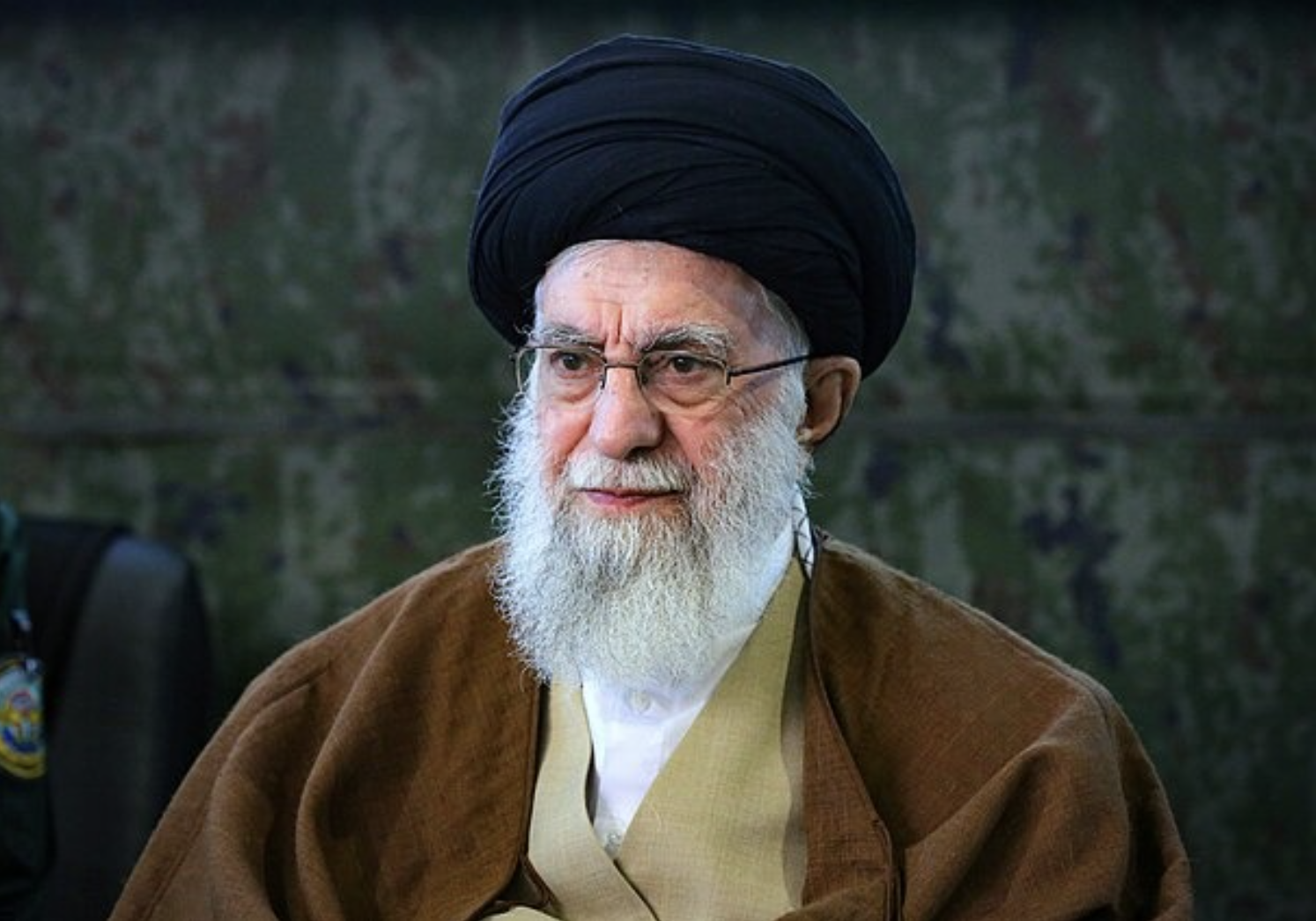
International Law on the Precipice: Examining the Legality of the US-Israeli Attacks on Iran
Introduction
On the 28th of February 2026, the US and Israel launched a series of strikes on Iran,[1] starting a conflict that has had profound impacts on politics, international relations, and the global economy.[2] This article will assess the legality of the US-Israeli attack on Iran regarding the international law concerning the use of force. In particular, it will discuss the following justifications given by both the US and Israeli governments: (i) self-defence, and (ii) humanitarian intervention. The article will end by refuting arguments for adding additional exceptions to the prohibition on the use of force, arguing that doing so would be rife for abuse and would not address structural problems in the international legal system.
Background: The Prohibition on the Use of Force and Exceptions
As a starting point, the use of force in international law is prohibited by article 2(4) of the UN Charter.[3] The Charter includes two exceptions to this rule: authorisation through the UN Security Council (UNSC) through Chapter VII of the Charter and self-defence under art 51. However, it has also been argued by some legal scholars that the prohibition on the use of force can be displaced through concepts such as humanitarian intervention and R2P. The feasibility of this will be discussed in their representative sections.
Self-defence and Imminence
The first justification that the Trump Administration has given for the attacks is self-defence. As President Trump himself has stated, ‘[their] objective is to defend the American people by eliminating imminent threats from the Iranian regime’.[4] Though art 51 of the UN Charter specifically requires the force taken in self-defence to be in response to an armed attack, there has been (albeit hotly debated) customary authority dating back to the Caroline correspondence that force used in response to a pre-emptive threat can justify self-defence.[5] However, cases of pre-emptive self-defence include a strict requirement that the threat must be imminent, which is interpreted in the Caroline correspondence to mean a situation that is ‘instant, overwhelming, leaving no choice of means, and no moment for deliberation’.[6]
The evidence that President Trump gives for the imminence of the Iranian threat is threefold: (i) ‘that Iran has been an imminent threat to America ever since the Islamic Revolution in 1979’, (ii) Iran’s development of ‘intercontinental ballistic missiles’, and (iii) the resurgence of Iran’s nuclear programme.[7] On the incredibly strict reading of imminence in Caroline, which essentially allows force to be used at the last possible moment when no other measure can be contemplated, it is clear that none of the evidence fulfils the imminence threshold. This is also setting aside the fact that the Trump Administration has given no evidence as to the existence of a reconstituted nuclear programme or an intent on the part of the Iranian government to launch ballistic missiles onto US or Israeli soil.[8] As such, the self-defence justification fails.
Humanitarian Intervention
The second justification that can be implied from the statements of the Trump Administration is the controversial notion of humanitarian intervention. This follows from statements made by President Trump during the Iran protests that started in December 2025, where it was said that ‘the US "will come to [the protestors’] rescue"’.[9] It is true that the Iranian government’s crackdown of the protests has led to monumental death tolls and almost certainly constitutes crimes against humanity,[10] but the legality of a unilateral intervention by another sovereign state to correct this is questionable and unlikely to be applicable to the US-Israeli attacks.
First assessing the starting point for the legality of humanitarian interventions, the ICJ in Nicaragua stated in 1986 that ‘the use of force could not be the appropriate method to monitor or ensure’ respect for human rights.[11] This position has been complicated by subsequent state practice and academic commentary, particularly the 1999 NATO intervention to prevent humanitarian catastrophe in Kosovo and the UK government’s strong push towards a principle of humanitarian intervention.[12] That said, there were ‘widespread negative reactions’ from states to the 1999 NATO intervention[13] and, as Schmitt, Bridgeman, and Goodman argue, ‘[t]he position that there is a customary international law norm permitting humanitarian intervention remains an outlier’.[14]
Even if it can be assumed that humanitarian intervention is legal, the US-Israeli intervention in Iran will not qualify as the de facto performance of the operation is not consistent with the aim of humanitarian intervention. As Dannenbaum and Hamilton state, ‘neither the United States nor Israel has articulated the mission in terms of atrocity prevention and the military operations are plainly not narrowly tailored to a humanitarian objective [links omitted]’.[15] This was illustrated quite starkly when an Iranian girls’ school was struck on the 28th of February by, from what is likely from available evidence, a US missile.[16] As Schmitt, Bridgeman, and Goodman point out, ‘it is doubtful that the Trump administration truly harbored humanitarian motivations’.[17] Therefore, it is unlikely that the strikes are legal by virtue of a humanitarian intervention exception.
Counselling Caution against the Humanitarian Intervention and ‘Self-preservation’ Exceptions
It is not controversial to say, and indeed accepted by even supporters of the US-Israeli strikes,[18] that the strikes are manifestly illegal under international law as it currently stands. As Milanovic states, ‘[t]he violation of the Charter here is simply as plain as it could possibly be’.[19] However, the strikes themselves and the varying levels of acceptance that some states, especially in the West, have had towards the intervention have led to certain authors such as Shany and Cohen arguing that this evidences a desire for states to recognise either the humanitarian intervention exception or a narrower ‘self-preservation’ exception.[20] Notwithstanding the fact that this author is sceptical that tacit approval of the intervention could in any way evidence support for exceptions that will apply to all cases, it will be argued that the acceptance of this argument would actively undermine international peace and security.
Firstly, it must be said that Shany and Cohen contend that the rules-based international order (RBIO) is under attack, with the complete erosion of the RBIO meaning ‘that international law no longer plays an important role in the conduct of international relations’.[21] They contend that this is partly due to the fact that the UN system has failed to ‘deliver peace, security and justice’.[22]
While the RBIO and by extension the very existence of international law is indeed under attack, what Shany and Cohen do not consider is the fact that the main driver of this attack is the sheer unwillingness of states to conform with rules of international law in order to advance national interests, which is driven partly by a global rise in authoritarianism.[23] This can be seen, for example, in the Trump Administration’s ongoing strikes on drug boats in the Pacific and Caribbean despite almost unanimous consensus that they are prohibited under international law[24] or in the ongoing Russian invasion of Ukraine. These uses of force can and have used seemingly humanitarian justifications: the prevention of drug-related deaths for the former and the right to self-determination of the people of Russian-speaking regions of Ukraine in the latter. This does not change the fact this reasoning is questionable at best. For instance, the former ignores the fact that the strikes themselves are grossly disproportionate given the availability of capture through the Coast Guard. What can often be framed as delivering ‘peace, security, and justice’[25] on its face may simply be covers for, as in Milanovic’s words, ‘the lack of any commitment to even try to comply with the law in good faith’.[26]
To allow for the humanitarian intervention exception, which has already been controversial for being ‘susceptible to abuse’,[27] would simply provide for more avenues for states to justify their actively harmful acts. The same can be said for the self-preservation exception, which risks allowing the reignition of wars that have laid dormant for years. For example, it is not hard to see how North Korea could use something akin to the self-preservation exception to justify a hypothetical use of force on South Korea.
As such, rather than allowing for ad hoc uses of unilateral force, it is much more effective to advocate for reform of the UNSC and other UN institutions in order to fix the structural problems that led to the erosion of the RBIO. As was poignantly pointed out by Milanovic, ‘[c]ausing and being unable to stop something are not the same thing’.[28] It is easy to blame international law for the erosion of the RBIO and to say that its rules do not do enough to stop threats to international peace and security. After all, international law is not perfect and there certainly are areas in dire need of clarification and reform. However, this ignores the trend of states ignoring international law completely to further their own interests, which is something that international law cannot solve on its own no matter how many treaties are amended or how many exceptions to rules are granted. This is a structural matter that relies on addressing the root causes of the erosion: the rise of authoritarianism regimes, their subsequent ignoring of international law, and the UN system’s failure to stop this.
Conclusion
In conclusion, the US-Israeli attack on Iran is manifestly illegal through the prohibition on the use of force. The self-defence exception based on pre-emptive self-defence will not apply as the Iranian threat is not imminent. The humanitarian intervention exception, assuming it exists, will not apply as the US’s and Israel’s actions have been antithetical to their presumably humanitarian aim. Furthermore, calls for a recognition of the humanitarian intervention exception and the self-preservation exception are misguided because they can and will lead to more harm than good. As Milanovic states, ‘[t]he prohibition on the resort to force in international relations is the keystone of the contemporary international legal system’.[29] It is imperative that this principle is respected and not eroded.
References
[1] Tom Bateman and Daniel Bush, ‘Six key lines from Trump's statement on Iran strikes’ BBC (28 February 2026) <https://www.bbc.co.uk/news/articles/c620d3nnw80o> accessed 12 March 2026.
[2] Martin Wolf, ‘The economic consequences of war with Iran’ Financial Times (11 March 2026) <https://www.ft.com/content/dab7d625-77f8-40ff-aeb9-451f81772125> accessed 12 March 2026.
[3] Charter of the United Nations (adopted 26 June 1945, entered into force 24 October 1945)
[4] Bateman and Bush (n1)
[5] UNGA ‘In larger freedom: towards development, security and human rights for all: report of the Secretary-General’ (2005) UN Doc A/59/2005, para 124.
[6] R Y Jennings, 'The Caroline and McLeod Cases' (1938) 32 AJIL 82, 89.
[7] Bateman and Bush (n1)
[8] Marko Milanovic, ‘The American-Israeli Strikes on Iran are (Again) Manifestly Illegal’ (EJIL:Talk!, 28 February 2026) < https://www.ejiltalk.org/the-american-israeli-strikes-on-iran-are-again-manifestly-illegal/>accessed 12 March 2026.
[9] Sky News, ‘Why are people protesting in Iran? Everything you need to know’ Sky News (19 January 2026) <https://news.sky.com/story/why-are-people-protesting-in-iran-everything-you-need-to-know-13490639> accessed 12 March 2026.
[10] Nema Milaninia, ‘What the Current Crises Facing Iran Mean for Human Rights and Rules on the Use of Force’ (Just Security, 20 February 2026) <https://www.justsecurity.org/131870/iran-crises-human-rights-rules-use-force/> accessed 12 March 2026.
[11] Military and Paramilitary Activities in and against Nicaragua (Nicaragua v. United States of America) (Merits) [1984] ICJ Rep 392 (Nicaragua), para 268.
[12] See Christine Gray and Andrew Sanger, ‘The Use of Force and the International Legal Order’ in Malcolm Evans (ed), International Law (6th edn, OUP 2024) 598-600.
[13] Gleider Hernández, International Law (3rd edn, OUP 2025) 403.
[14] Michael Schmitt, Tess Bridgeman, and Ryan Goodman, ‘Expert Q&A: Are U.S. Threats or Use of Force Against Iran Lawful?’ (Just Security, 21 February 2026) <https://www.justsecurity.org/132180/us-iran-war-strike/> accessed 12 March 2026.
[15] Tom Dannenbaum and Rebecca Hamilton, ‘Aggression, Plain and Simple: A Response to Shany and Cohen on the Attack on Iran’ (Just Security, 9 March 2026) <https://www.justsecurity.org/133417/aggression-iran-response-shany-cohen/> accessed 12 March 2026.
[16] Elizabeth Melimopoulos, ‘Who bombed the Iranian girls’ school, killing more than 170? What we know’ Al Jazeera (12 March 2026) <https://www.aljazeera.com/news/2026/3/12/who-bombed-the-iranian-girls-school-killing-more-than-170-what-we-know> accessed 12 March 2026.
[17] Schmitt, Bridgeman, and Goodman (n14).
[18] Yuval Shany and Amichai Cohen, ‘The International Community at a Crossroads Over Iran: The reawakening of “illegal but legitimate” or the “law of self-preservation”?’ (Just Security, 6 March 2026) < https://www.justsecurity.org/133292/international-law-crossroads/> accessed 12 March 2026.
[19] Milanovic (n8)
[20] Shany and Cohen (n8)
[21] ibid.
[22] ibid.
[23] For more on this, see Marko Milanovic, ‘Dystopian International Law’ (2026) 120(1) AJIL 107.
[24] For more of this author’s thoughts on this, see Min Thant Nyi, ‘A “War” on Drugs: Examining the Jus ad Bellum and Jus in Bello Justifications for US Strikes on Drug Boats in the Caribbean and Pacific’ (Durham Law Review, 26 February 2026) <https://durhamlawreview.squarespace.com/legal-developments/a-war-on-drugs-examining-the-jus-ad-bellum-and-jus-in-bello-justifications-for-us-strikes-on-drug-boats-in-the-caribbean-and-pacificforum> accessed 12 March 2026.
[25] Shany and Cohen (n8).
[26] Milanovic (n23) 116.
[27] Hernández (n13) 401.
[28] Milanovic (n23) 118.
[29] Milanovic (n8).
Image Credits
khamenei.ir on Wikimedia Commons <https://commons.wikimedia.org/wiki/File:Ali_Khamenei_-_Seyyed_Ali_Hosseini_Khamenei_-_2023-11-19_-_(4).jpg>

.jpg)