
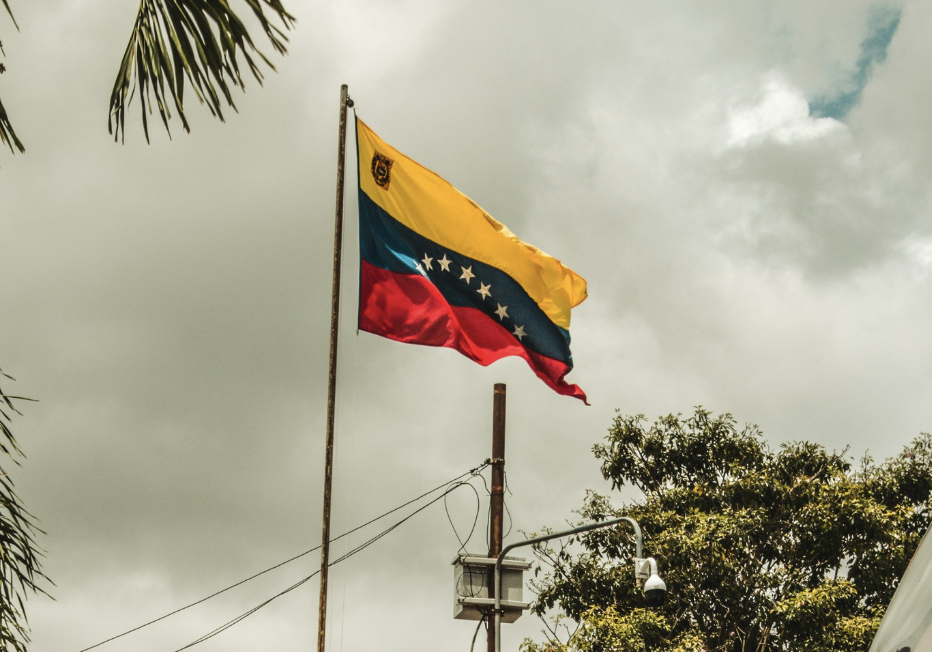
The Legality of the U.S. Capture of Venezuelan President Nicolás Maduro: Constitutional, Statutory, and International Law Perspectives
On the 3rd of January 2026, the United States executed a military operation in Caracas that resulted in the capture of Venezuelan President Nicolás Maduro and his wife, Cilia Flores. The couple were forcibly transferred to New York to face federal criminal charges. Since then, the matter has escalated due to political tensions, and long standing diplomatic pressure, along with a deep division between the international legal community. The operation has triggered multifaceted debate over the legal boundaries of executive power, the nature of sovereign immunity and the restrictions of international legal order.
Constitutional and Statutory Law
The U.S governments defence of the operation is solely based on assertion of inherent executive authority. According to a declassified Department of Justice memo from the Office of Legal Counsel (OLC), President Trump had constitutional rights. Expressing how it was in his capacity as Commander-in-Chief, to order ‘Operation Absolute Resolve,’[1] a mission characterised by the administration as a law enforcement operation supported by military force rather than a war. Significantly, the memo did not reach a definitive conclusion on whether the conduct violated international law, since international law ‘does not restrict the president as a matter of domestic law.’[2]
This domestic legal reasoning has been widely criticised. According to the U.S Constitution, congress has the authority to declare war and approve the use of military force[3]. The War Powers Resolution (1973) also places limits on the executive’s deployment of forces abroad without congressional approval, stating how there needs to be ‘collective judgment’[4]. Critics argue that the Trump administration’s failure to seek congressional authorisation prior to launching a combat operation on foreign soil undermines the separation of powers and may violate domestic statutory limits.
Furthermore, several constitutional lawyers have argued that the administration’s claim that the purpose was only law enforcement is undermined by the sheer scope of the use of force, including the attacks on military infrastructure. If the operation rose to the level of an armed conflict, the President’s unilateral authority without congressional authorisation becomes much more legally tenuous.
International Law: Sovereignty, Use of Force, and Head-of-State Immunity
A. The UN Charter and the Prohibition on the Use of Force
International law scholars overwhelmingly have shown disapproval, and critiqued the operation as a breach of the United Nations Charter’s foundational prohibition on the use of force. Article 2(4) of the Charter states that all UN members shall refrain from ‘the threat or use of force… against the territorial integrity or political independence of any state,’[5] absent Security Council authorisation or self-defence.
Legal academics argue that none of these exceptions apply. Professor Zinaida Miller of Northeastern University, expressed that the actions taken by the administration were ‘a blatant violation of Article 2(4)’[6]. This was further supported, by commentary from Oxford University, which explains that even if cast as law enforcement, the use of military force on another state’s territory without consent constitutes unlawful aggression[7].
Several nations echoed these concerns at the United Nations. UN Secretary-General António Guterres publicly expressed concern that the operation did not respect international law and is ‘deeply alarmed’[8]. Russia, China, and Colombia condemned the U.S. action as illegal, while other council members emphasised adherence to the Charter without directly attributing illegality.
B. Sovereignty and Head-of-State Immunity
Another major legal issue arises from principles of sovereignty and head-of-state immunity. Under customary international law, heads of state enjoy personal immunity from prosecution in foreign domestic courts, intended to uphold diplomatic stability and prevent politically motivated prosecutions. Having said this, this does not mean they enjoy prosecution for atrocious crimes.[9] Therefore, critics argue that capturing a foreign leader without consent undermines this foundational principle, even where a leader is widely regarded as illegitimate.
Although the U.S. and several Western states have not recognised Maduro as Venezuela’s legitimate president since disputed elections, many international law authorities assert that recognition decisions do not strip sitting heads of state of immunity. The French Cour de Cassation argued that ‘immunity should apply regardless of whether a state recognizes a head of state’s leadership – precisely to prevent politically motivated arrests.’ [10]
The Monroe Doctrine, the “Donroe Doctrine
President Maduro’s capture must also be situated within the longer historical tradition of the U.S foreign policy in Latin America, particularly the Monroe Doctrine and its contemporary reinterpretation as the Donroe Doctrine. Originally framed in ‘1823’ [11]which followed the ‘principle of non-intervention’[12] in the Western Hemisphere, the Monroe Doctrine has increasingly been reinterpreted as a mechanism for asserting regional dominance rather than preserving collective sovereignty. The contemporary Donroe Doctrine, articulated by senior officials during the Trump administration, reflects a shift from defensive non-intervention towards an openly hegemonic conception of hemispheric control. Originally framed as a defensive principle against European colonial intrusion, the Monroe Doctrine has long been operationalized as a basis for U.S. predominance in Latin America, blurring the line between non‑intervention. The Doctrine, for Latin American countries has been ‘a symbol of US dominance’[13] highlighting the tensions, and thus reflecting an evident shift from defence to intervention. The contemporary Donroe Doctrine makes this dynamic more explicit, recasting the hemisphere as a zone in which U.S. power may be unilaterally exercised to shape political outcomes, thereby normalising intervention ‘more broadly’[14].
Political and Normative Implications
The operation has attracted several international reactions, reflecting deep disagreement. France’s foreign minister Jean-Noël Barrot., declared that the operation ‘violates the principle of not resorting to force that underpins international law’[15]. Moreover, political leaders across Africa and the Caribbean similarly expressed disapproval, stating how the abduction ‘violated the country’s sovereignty …. and independence.’[16]
At the United Nations, debates revealed a split between states that wished to critique the U.S. operation and those cautious about directly denouncing a powerful member. Scholars warn that neglecting clear legal boundaries in favour of ad hoc assertions of executive authority could weaken the international consensus, and that ‘every state not calling out this blatant aggression helps hold the axe that shatters the international order.’[17]
Conclusion
In conclusion, the legal debate over the U.S. capture of Nicolás Maduro illustrates a profound tension at the intersection of U.S. constitutional law, international legal order, and executive power in foreign affairs. Domestically, there is a clash between executive authority and constitutional prerogatives. Whereas, internationally the operation conflicts with foundational concepts of sovereignty, non-intervention and immunity.
References
[1] US Justice Department discloses internal memorandum on capture of Maduro - JURIST - News
[2] Memorandum for Legal Advisor, National Security Council, from T. Elliot Gaiser, Assistant Attorney General, Office of Legal Counsel, Re: Proposed War Department Operation to Support Law Enforcement Efforts in Venezuela (December 23, 2025)
[3] Full Text of the United States Constitution with All 27 Amendments (Article 1, section 8)
[4] War Powers Resolution of 1973
[5] United Nations Charter (full text) | United Nations Article 2 (4)
[6] Maduro Captured: Was the Act Legal, and Is the US Now at War?
[7] Expert Comment: The illegality of the US attack against Venezuela is beyond debate - how the world reacts is critical | University of Oxford
[8] US actions in Venezuela ‘constitute a dangerous precedent’: Guterres | UN News
[9] Time to Revisit the ICC’s Position on Head-of-State Immunity?
[10] Experts react: The US just captured Maduro. What’s next for Venezuela and the region? - Atlantic Council
[11] Monroe Doctrine (1823) | National Archives
[12] Monroe Doctrine: The Controversial Cornerstone of US Foreign Policy - World History Encyclopedia
[13] The Monroe Doctrine and Its Evolution from Non-Interference to American Intervention
[14] ibid
[15] Global outcry after US launches strikes on Venezuela and captures president | Venezuela | The Guardian
[16] Africa voices solidarity with Venezuela after US military operation targeting Maduro
[17] Expert Comment: The illegality of the US attack against Venezuela is beyond debate - how the world reacts is critical | University of Oxford
Image Credits
Roger Cuzna on Unsplash <https://unsplash.com/photos/a-flag-on-a-pole-geLRm0RMRWM>
![Third-Party Litigation Funding after R (PACCAR) v Competition Appeal Tribunal [2023]](https://images.squarespace-cdn.com/content/v1/5dcbd47573aa836622ed9589/1769283259814-OM3CD80RVUSZJKK69D1S/romain-dancre-doplSDELX7E-unsplash.jpg)