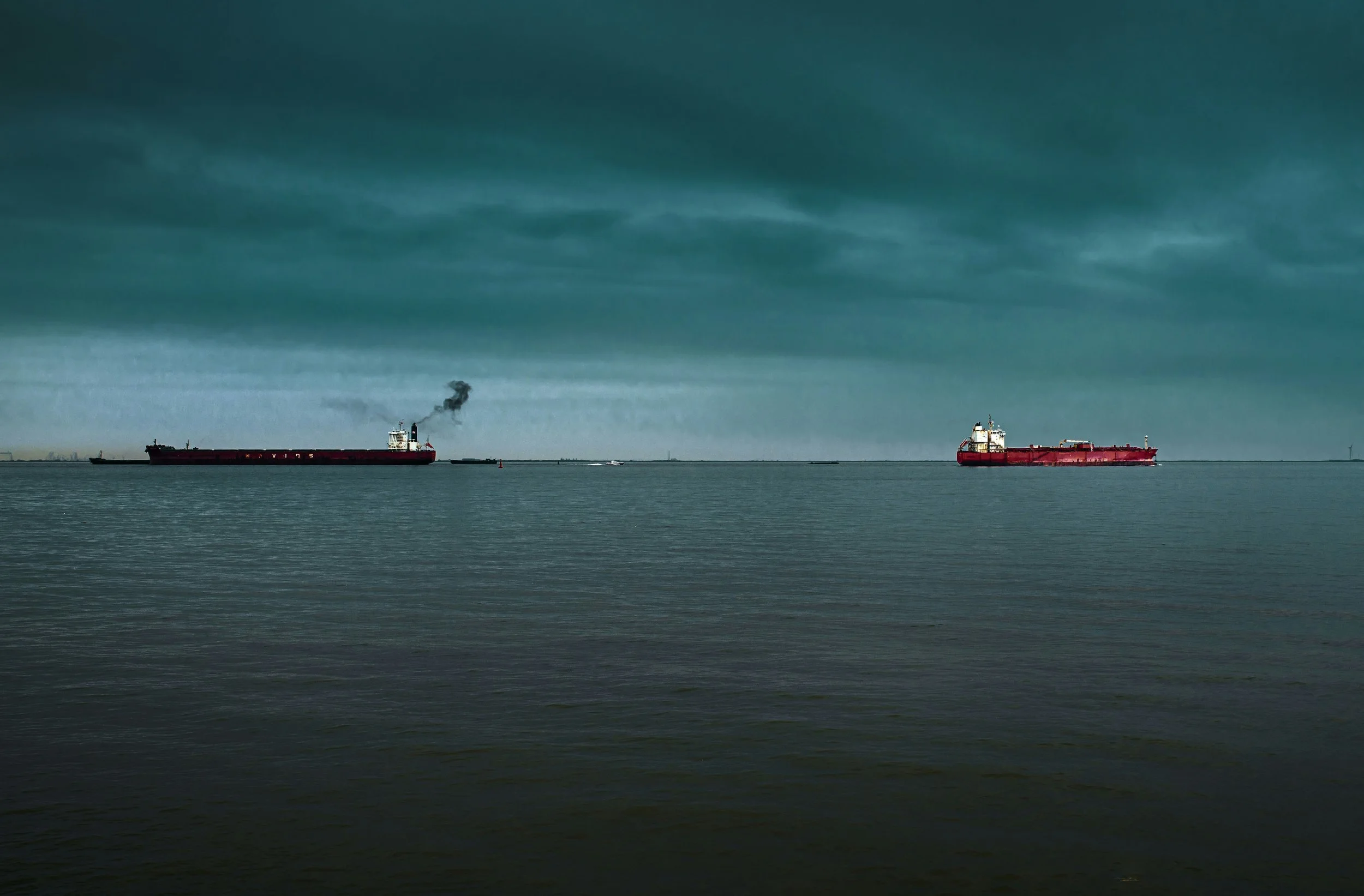
War, Risk and Contractual Impossibility: Force Majeure and Frustration in an Era of Geopolitical Supply Chain Disruption
Introduction
On 4 March 2026, following attacks on maritime and energy infrastructure in the Gulf, global oil prices surged as vessels diverted from the Strait of Hormuz, a strategic maritime passage through which approximately one-fifth of the world’s crude oil and liquefied natural gas transit [1]. The disruption illustrates the vulnerability of global supply chains to geopolitical instability and raises a central legal question: when should contract law excuse non-performance caused by such events?
English law traditionally addresses these disruptions through two mechanisms: contractual force majeure clauses and the doctrine of frustration. Both operate within a framework that prioritises a strict threshold of physical impossibility rather than broader notions of commercial impracticality [2]. This essay argues that while this framework is doctrinally coherent and commercially predictable, its emphasis on literal impossibility may inadequately capture the operational realities of modern geopolitical disruption. At the same time, the strict judicial approach performs a vital function in preserving contractual certainty and preventing opportunistic avoidance. The central issue is therefore not whether the framework is flawed, but whether its conception of impossibility remains sufficient for contemporary international commerce.
Force Majeure and Contractual Risk Allocation
Force majeure clauses are contractual mechanisms through which parties allocate risk when extraordinary events disrupt performance [3]. In international commercial contracts, such clauses commonly reference war, sanctions, government action, terrorism, natural disasters, or cyber events [4]. Their function is to permit suspension or termination of obligations where performance is prevented by such events.
Under English law, force majeure has no independent doctrinal status and operates solely as a matter of contractual agreement [5]. Courts therefore enforce these clauses strictly according to their wording. This reflects a broader commitment to freedom of contract and private risk allocation. Comparative legal systems adopt a more interventionist approach: French law (Code civil, art 1218) and German law (BGB §313) recognise doctrines allowing judicial adjustment of obligations where unforeseen events disrupt contractual equilibrium [6]. Similarly, the UNIDROIT Principles of International Commercial Contracts, a non-binding but influential framework for harmonising international commercial law, recognise hardship and permit renegotiation where performance becomes excessively onerous [7].
Academic commentary strongly supports the English position. Millett emphasises that commercial law expects parties to allocate foreseeable risks at the drafting stage rather than rely on ex post judicial adjustment [8]. McKendrick likewise argues that commercial actors are best placed to assess and distribute risk given their superior knowledge of operational contexts [9]. Chitty on Contracts reinforces this, noting that judicial intervention is exceptional and arises primarily where contractual drafting fails to address relevant contingencies [10].
This approach is reinforced in modern practice. Guidance from the International Chamber of Commerce and the Lloyd’s Market Association encourages parties to draft detailed clauses addressing geopolitical escalation, sanctions, cyber risks, and regulatory restrictions [11]. Such clauses are increasingly sophisticated, particularly in shipping, energy, and commodities markets.
However, the strength of this model is also its limitation. Where geopolitical events escalate in ways not specifically anticipated, the availability of relief depends less on the severity of disruption than on the precision of drafting [12]. In a rapidly shifting geopolitical environment, this creates a structural tension between contractual certainty and the unpredictability of risk.
The Strict Legal Threshold of Impossibility
Even where force majeure clauses exist, English courts interpret them narrowly. The event must prevent performance, not merely render it more difficult or expensive [13]. This principle was established in Tennants (Lancashire) Ltd v CS Wilson & Co Ltd, where increased cost did not excuse performance [14].
Geopolitical cases reinforce this approach. In Tsakiroglou & Co Ltd v Noblee Thorl GmbH, closure of the Suez Canal did not frustrate the contract because shipment via the Cape of Good Hope remained possible, albeit more costly [15]. Similarly, Ocean Tramp Tankers Corp v V/O Sovfracht (The Eugenia) confirmed that alternative routes, even if significantly more burdensome, do not discharge obligations [16].
More recent authorities, such as Bunge SA v Tradax SA and ARAG SE v Allianz Global Risks, demonstrate the same judicial instinct in contexts involving embargoes, sanctions, and war-related risks: performance remains enforceable where it is technically feasible [17].
From one perspective, this strict threshold is essential. It preserves certainty, ensures predictability in international trade, and prevents parties from invoking external disruption as a pretext for escaping bad bargains. However, it also exposes a tension between doctrine and practice. Modern supply chains are highly sensitive to cost escalation, insurance premiums, regulatory constraints, and logistical complexity [18]. A contract may remain physically performable while becoming commercially irrational or operationally hazardous. The law’s binary distinction between possible and impossible performance therefore risks misaligning legal outcomes with commercial reality.
Frustration as a Limited Safety Net
Where force majeure clauses are absent or inadequate, frustration operates as a residual mechanism of relief. In principle, it functions as a safety net, allowing courts to discharge contracts where unforeseen events render performance radically different from what was originally undertaken [19]. Unlike force majeure, which reflects the parties’ agreed allocation of risk, frustration is imposed by law and can address gaps in contractual drafting.
In practice, however, this safety net is extremely narrow. The requirement that performance be “radically different” sets a high threshold that is rarely satisfied. In Davis Contractors Ltd v Fareham Urban District Council, increased cost and delay were insufficient [20]. In J Lauritzen AS v Wijsmuller BV (The Super Servant Two), significant logistical constraints likewise failed to frustrate the contract [21]. Treitel’s observation that frustration operates “within narrow limits” reflects a consistent judicial concern to preserve certainty [22].
The result is that frustration rarely provides meaningful relief in cases of geopolitical disruption. Many contemporary risks, including sanctions, conflict, and trade route instability, do not render performance impossible but instead transform its economic and operational basis. Because the doctrine does not engage with these dimensions, its role as a safety net is largely theoretical rather than practical. It fills gaps in drafting only in exceptional cases, leaving a significant category of disruption unaddressed by either doctrine.
Operational Realities in Contemporary Global Commerce
Geopolitical instability increasingly affects contractual performance in ways that extend beyond physical impossibility. Energy companies may face war risk insurance premiums that exceed contractual profit margins, logistics firms may encounter port closures or sanctions compliance requirements, and personnel may be exposed to active conflict zones [23]. Empirical studies by the OECD and World Bank confirm that such disruptions significantly affect supply chain reliability and commercial outcomes [24].
These developments challenge the adequacy of a binary conception of performance as either possible or impossible. A more realistic inquiry is whether performance remains commercially viable and operationally sustainable. English law, however, largely excludes these considerations, maintaining a focus on physical capability rather than economic or risk-based feasibility. This creates a gap between doctrinal logic and commercial practice.
Evolving Contractual and Judicial Responses
Responses to these challenges are emerging through both contractual innovation and incremental doctrinal adaptation.
Commercially, parties are increasingly adopting multi-layered force majeure clauses that distinguish between total prevention and severe disruption. These clauses allow for suspension, renegotiation, or price adjustment rather than immediate termination. Hardship clauses, influenced by civil law and the UNIDROIT Principles, are also becoming more common, triggering renegotiation where performance becomes excessively onerous [25].
In addition, contracts increasingly incorporate material adverse change clauses and dynamic risk-sharing mechanisms, such as price escalation provisions linked to freight or insurance indices. These tools enable parties to respond flexibly to geopolitical volatility without relying solely on rigid doctrines.
Judicially, there is scope for a more context-sensitive interpretation of “prevention” in force majeure clauses. Courts could recognise that extreme regulatory constraints, sanctions regimes, or operational risks may effectively preclude performance even where physical execution remains possible. This would not require abandoning certainty, but rather interpreting contractual language in light of commercial reality.
Comparative frameworks demonstrate that such flexibility is achievable. Civil law doctrines and international principles provide models for integrating hardship and renegotiation without undermining predictability. The challenge for English law is to incorporate similar sensitivity while maintaining its commitment to certainty.
Conclusion
Geopolitical instability increasingly shapes the conditions under which commercial contracts are performed. Armed conflict, sanctions, and disruptions to strategic trade routes can fundamentally alter the operational and economic context of performance.
English contract law addresses these risks through force majeure and frustration, both of which prioritise a strict conception of impossibility. This framework promotes certainty and discourages opportunistic avoidance, but may fail to capture the complexities of modern global commerce.
The central challenge is therefore not whether the law should abandon its emphasis on certainty, but whether its conception of impossibility should evolve to reflect contemporary realities. Through more sophisticated contractual drafting and a modestly more contextual approach to interpretation, English law can remain both predictable and responsive in an increasingly volatile global environment.
Footnotes
[1] BBC News, ‘Oil price passes $100 a barrel as war in Middle East continues’ (7 March 2026) https://www.bbc.com/news/articles/cr5lz0vgy52o accessed 10 March 2026.
[2] Ewan McKendrick, Force Majeure and Frustration (Hart Publishing 2020) 23.
[3] ibid.
[4] UNIDROIT Principles of International Commercial Contracts (2020).
[5] McKendrick (n 2).
[6] French Civil Code art 1218; German Civil Code (BGB) §313.
[7] UNIDROIT Principles (n 4).
[8] PJ Millett, ‘Festina Lente: A Law Merchant Perspective on the Law of Contract’ (1997) 113 LQR 433.
[9] McKendrick (n 2) 28.
[10] Chitty on Contracts (34th edn, Sweet & Maxwell 2021) para 17-001.
[11] ICC, Force Majeure and Hardship Clauses (2021); Lloyd’s Market Association, War Risks and Supply Chains (2026).
[12] McKendrick (n 2).
[13] ibid.
[14] Tennants (Lancashire) Ltd v CS Wilson & Co Ltd [1890] 25 QBD 548 (QB).
[15] Tsakiroglou & Co Ltd v Noblee Thorl GmbH [1962] AC 93 (HL).
[16] Ocean Tramp Tankers Corp v V/O Sovfracht (The Eugenia) [1964] 2 QB 226 (CA).
[17] Bunge SA v Tradax SA [1981] 1 Lloyd’s Rep 45 (Comm); ARAG SE v Allianz Global Risks [2018] EWHC 1890 (Comm).
[18] OECD, Global Supply Chains and Conflict Risk (2025).
[19] McKendrick (n 2); G H Treitel, The Law of Contract (14th edn, Sweet & Maxwell 2020).
[20] Davis Contractors Ltd v Fareham UDC [1956] AC 696 (HL).
[21] J Lauritzen AS v Wijsmuller BV (The Super Servant Two) [1990] 1 Lloyd’s Rep 1 (QB).
[22] Treitel (n 19) 1083.
[23] Lloyd’s Market Association (n 11).
[24] World Bank, Trade Disruptions in Conflict Zones (2024).
[25] ICC (n 11); UNIDROIT Principles (n 4).
Bibliography
Books
McKendrick E, Force Majeure and Frustration (Hart Publishing 2020)
Treitel GH, The Law of Contract (14th edn, Sweet & Maxwell 2020)
Chitty on Contracts (34th edn, Sweet & Maxwell 2021)
Journal Articles
Millett PJ, ‘Festina Lente: A Law Merchant Perspective on the Law of Contract’ (1997) 113 LQR 433
Cases
ARAG SE v Allianz Global Risks [2018] EWHC 1890 (Comm)
Bunge SA v Tradax SA [1981] 1 Lloyd’s Rep 45 (Comm)
Davis Contractors Ltd v Fareham UDC [1956] AC 696 (HL)
J Lauritzen AS v Wijsmuller BV (The Super Servant Two) [1990] 1 Lloyd’s Rep 1 (QB)
Ocean Tramp Tankers Corp v V/O Sovfracht (The Eugenia) [1964] 2 QB 226 (CA)
Tennants (Lancashire) Ltd v CS Wilson & Co Ltd [1890] 25 QBD 548 (QB)
Tsakiroglou & Co Ltd v Noblee Thorl GmbH [1962] AC 93 (HL)
Reports and Online Sources
BBC News, ‘Oil price passes $100 a barrel as war in Middle East continues’ (7 March 2026)
ICC, Force Majeure and Hardship Clauses (2021)
Lloyd’s Market Association, War Risks and Supply Chains (2026)
OECD, Global Supply Chains and Conflict Risk (2025)
World Bank, Trade Disruptions in Conflict Zones (2024)
Image Credits
zhao chen on Unsplash <https://unsplash.com/photos/red-and-white-ship-on-sea-under-blue-sky-9jIqWxCApo0>